As someone who often serves as a juror for public design awards, I occasionally find myself caught in a strange sense of déjà vu. Why is it that bold and experimental public installations, the kind commonly encountered on the old streets of Europe, are naturally embraced in some cities, while in others they struggle to even get started? Some explain it simply as a difference in aesthetic taste, while others point to administrative conservatism as the cause. But rather than rushing to criticism, I prefer to see this phenomenon as a difference in the way societies approach design itself. If the essence of design lies in removing unnecessary elements, coordinating complexity, and gradually evolving toward something better, then what exactly are Korean cities choosing to preserve, and what are they choosing to erase? Am I the one who is mistaken, or are we pursuing an entirely different vision of what a city should be?
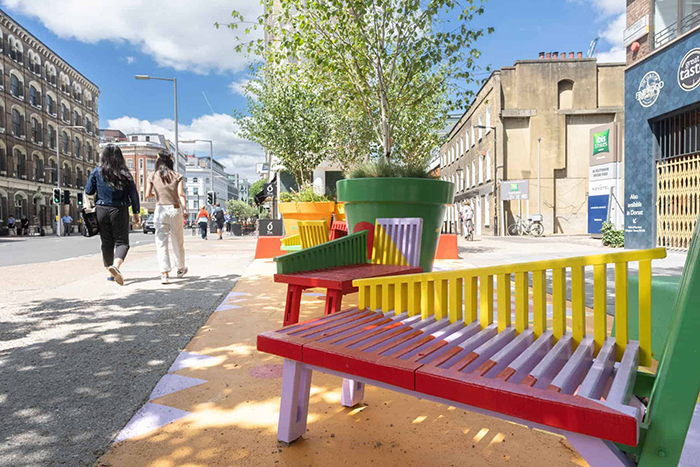
Bespoke Benches in London Bankside: The Harmony Between Bold Colors and Geometric Forms
< Image source: Bankside London >
What impressed me most in advanced European cities was their social willingness to embrace originality in design. For them, public design is not merely about satisfying regulations. It is closer to the act of layering new sensibilities and philosophies onto the vast canvas of the city itself. Even when radical forms and unexpected colors appear, administrations do not view them solely as risks or maintenance problems. Instead, they recognize them as important assets that create urban vitality and shape the identity of a place. Such scenes are only possible because society trusts designers not simply as service providers, but as professionals who actively contribute to the culture and dignity of the city itself.
In reality, the benches and public sculptures encountered on the streets of London or Paris are far more than functional facilities. The rough exposure of metal textures, aggressively twisted forms, and unexpected contrasts of color make the city feel like a living exhibition space. To some people, these elements may feel unfamiliar or even uncomfortable. Yet it is precisely that unfamiliarity that offers citizens new sensory experiences and leaves lasting impressions on visitors. In these cities, design is not a result created merely to satisfy regulations. It functions more like the language of the city itself, constantly provoking new questions and perspectives.
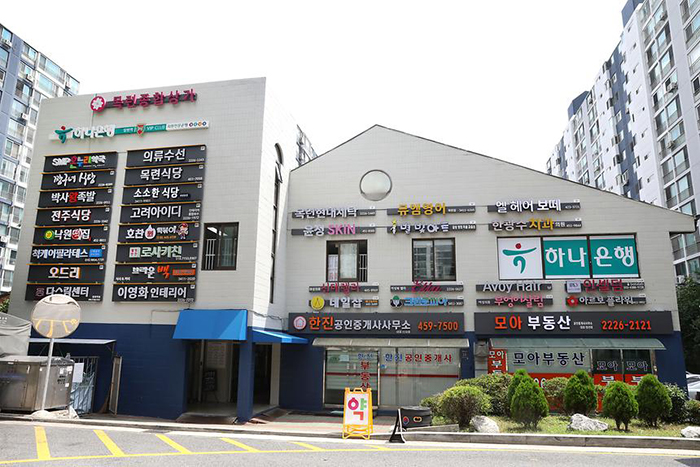
Gangnam District’s Commercial Signage Improvement Project:
Visual Order and Formal Harmony Achieved Through Standardized Guidelines
< Image source: Gangnam-gu Office >
On the other hand, while Korean public design is difficult to define as a single concept, it generally appears to place far greater value on uniformity and stability. This characteristic becomes especially clear in outdoor signage improvement projects. The once chaotic and inconsistent signboards of the past have been reorganized under unified guidelines, and the urban landscapes of Seoul and many other city centers have become significantly cleaner and more orderly than before. As a designer, I also believe this direction is absolutely necessary. Considering Korea’s high population density and complex urban environment, the systematic and management oriented approach of Korean public design offers very practical advantages.
The process of organizing streets that once lacked any coherent identity under a unified visual order plays an important role in reducing visual fatigue and providing citizens with a sense of stability and comfort. Carefully refined typography and standardized signage make the flow of the streets far clearer and easier to navigate. Beyond administrative efficiency, this can also be understood as one of the most rational ways of managing the city as a shared public asset.
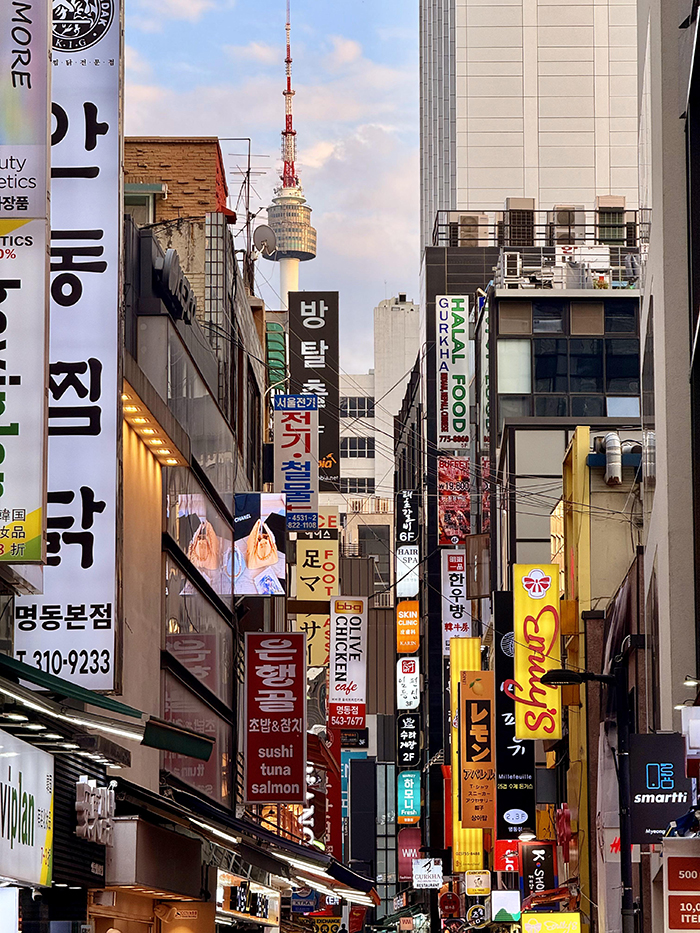
Beyond Ordered Uniformity: The Dynamic Energy Unique to Korean Cities
< Image source: Reddit (r/SouthKoreaPics) >
And yet, it is precisely at this point that I always feel a strange dilemma. In the process of organizing everything under a single standard, the unique dynamism and local character that once defined Korean cities seem to be gradually fading away. What is particularly interesting is the reaction of foreign visitors to Korea. Rather than being impressed by the polished scenery of neatly organized new towns, they are often far more captivated by old signboards, dense alleyways, and streets layered with traces of time.
The very elements that appear chaotic and in need of removal to us are often interpreted by them as evidence that the city is alive, as a form of unique cultural charm. If the “pure” state we pursue simply means erasing everything and making all spaces look the same, then that is no longer design but something closer to administrative control. The comfort created through order certainly has value, but we must also ask ourselves whether, in the process, we are erasing the spontaneity and distinctive aesthetics that cities naturally possess. Ultimately, I believe the role of public design is not to standardize everything, but to design a framework of order in which each space can express its own character without colliding destructively with others.
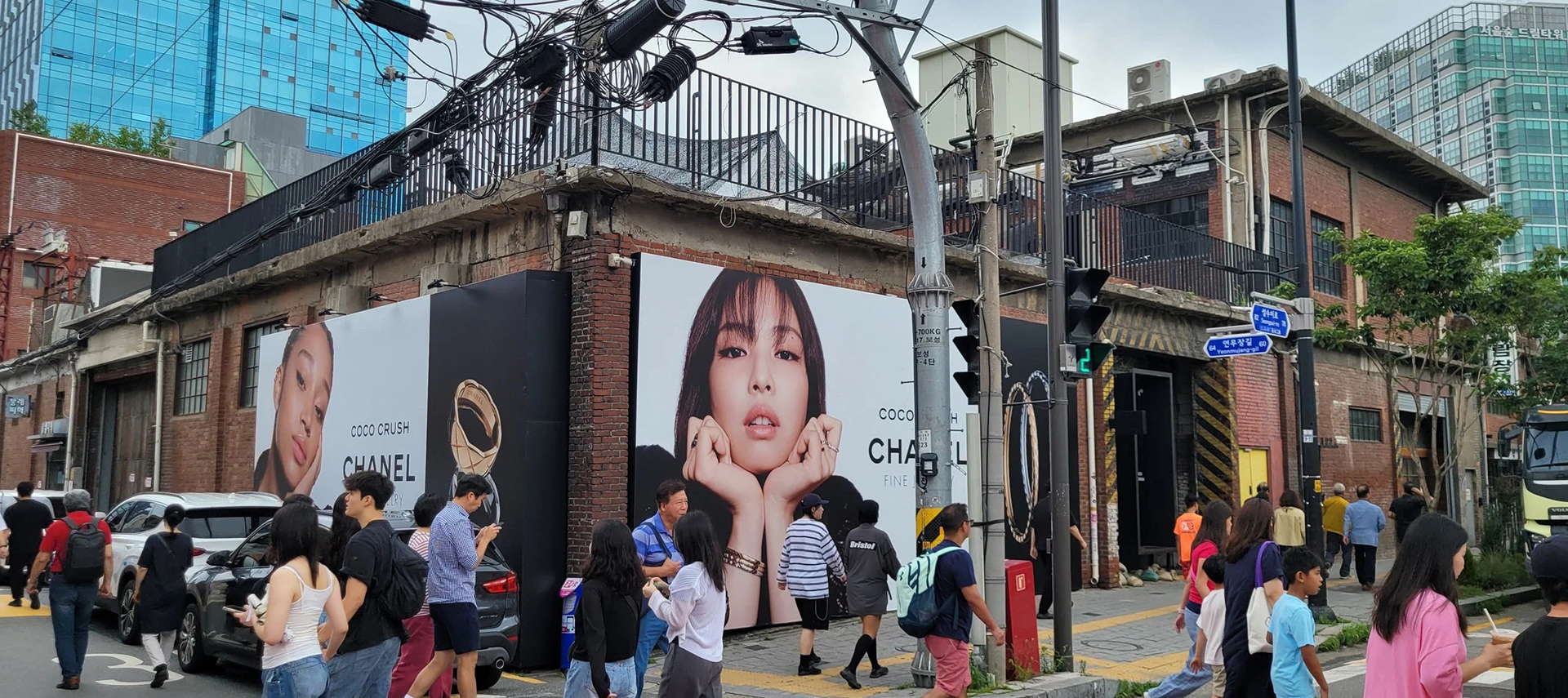
The fate of designers, in many ways, is to constantly search for the optimal balance between these conflicting values. The recent transformations seen in areas such as Seongsu dong and Euljiro feel like hopeful alternatives to this dilemma. Rather than completely erasing old industrial structures and worn traces of the past, these neighborhoods attempt to let them coexist with contemporary sensibilities, and in doing so, they have made Seoul feel far more interesting and multilayered.
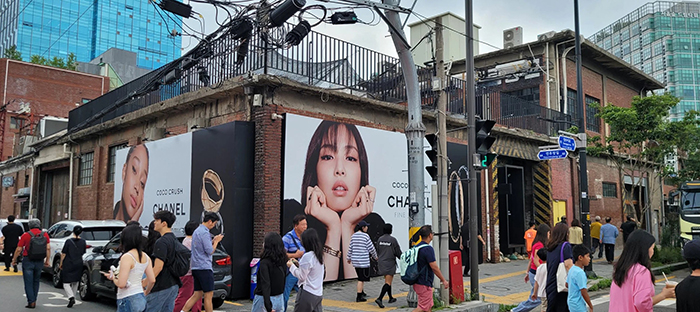
Cafe Streets of Seongsu-dong: The Fusion of Industrial Traces and Contemporary Sensibilities
< Image source: DKL Group Blog >
But here we encounter yet another dilemma. As Seongsu-dong became successful, a phenomenon quickly emerged in which countless areas began promoting themselves as the “next Seongsu.” Red brick facades and exposed concrete started spreading across the country almost like a formula, and to some, this may appear to be yet another form of standardized trend culture. Yet within this phenomenon, I actually see an interesting aspect of Korean design identity. Korea has moved beyond an era of completely demolishing the past and rebuilding from scratch. Instead, it now rapidly absorbs, imitates, and reinterprets even European-style renovation approaches in distinctly Korean ways, generating entirely new forms of urban order through remarkable speed and adaptability. This ability to imitate and adapt has, in many ways, been one of the foundations that shaped modern Korea itself. And perhaps that very dynamism has also become one of Korea’s most distinctive design languages.
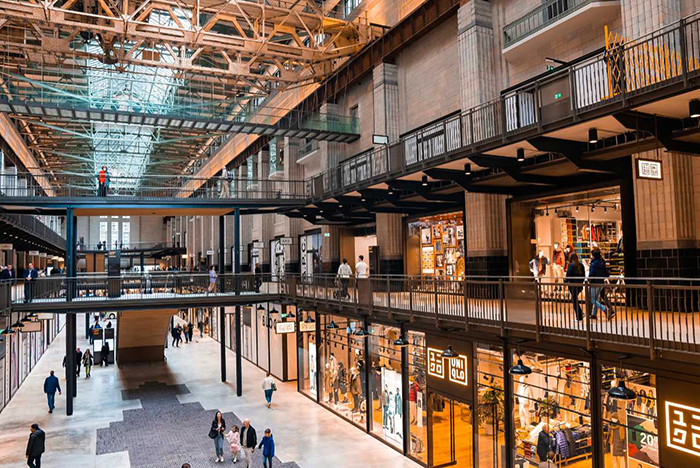
Battersea Power Station Renovation in London: The Coexistence of Past and Present
< Image source: Visit London >
By looking at a country’s cities, we can often infer not only its cultural identity, but even the tendencies of its designers from a design perspective. Just as the extreme restraint of Japanese minimalism or the human-centered sensibility characteristic of Scandinavian design is deeply reflected in their urban landscapes, Korea’s current ability to rapidly absorb foreign influences and reinterpret them in its own way may finally offer the clearest and most practical answer to the long-standing question: “What is truly Korean design?”
The true completion of design is not achieved through the transplantation of trendy aesthetics, but through respecting the layers of time embedded within a place and protecting the unique narratives accumulated on that land. It is not about simply replicating the past. Rather, it is about allowing contemporary aesthetics to settle naturally upon old brick walls, and enabling contrasting elements to coexist in dialogue without feeling forced or artificial. In many ways, this dynamic reinterpretation of the past represents the true face of Korea that I witness in 2026. I hope Korean cities will now move beyond simple urban maintenance and continue evolving into spaces layered with rich design narratives, cities that carry a uniquely Korean identity shaped through time, coexistence, and reinterpretation.
















#14057, 905 49, Beolmal-ro 102beon-gil,
Dongan-gu, Anyang-si, Gyeonggi-do, Korea
Business Registration Number: 454-86-01044
Online Sales License No.: 2021-Anyang Dongan-1081
Copyright © DESIGNSORI Co., Ltd.