
An in depth look at the analysis results of the 2026 to 2027 Asia Design Trend Report clearly indicates that light is no longer a supplementary element for finishing. The design descriptions and keywords of numerous winning entries prove that light has now been elevated to the status of a primary design material. In other words, it operates as a core element in establishing spatial design, atmosphere, and brand identity. The trend report has chosen to name this massive current "LUMINSCAPE", a conceptual amalgamation of 'Luminous' (the sensation of shining) and 'Landscape' (the artificial environment).
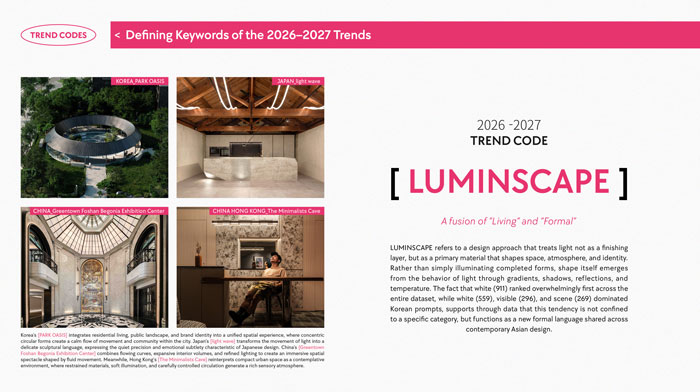
LUMINSCAPE is not merely a neologism combining two words. At the intersection where the sensation of light meets space, this term declares the birth of a new design material. It embodies the attitude of treating light itself as a formative element and the philosophy of designers seeking to utilize light as a core material constituting architecture and space. The text analysis results provide fascinating clues that support this. The word 'white', which is closely associated with space, recorded the highest frequency, appearing 911 times out of 142,290 total analyzed words. It appeared 559 times in Korean winning entries, 119 in China, 62 in Japan, 40 in Hong Kong, and 98 in Taiwan. The fact that a single word repeatedly appears at the top across all major regions can hardly be seen as a coincidence. Here, white is not simply a color choice. White functions as the most fundamental canvas that receives, reflects, and reveals light. On the surfaces of white walls, white ceilings, and white furniture, light is utilized as a tool to evoke intended sensations in the user. We were able to deduce from this trend analysis that the 'white' repeatedly appearing in this data is not an empty, colorless void, but rather the most accurate medium that physically embraces light.
Then why, at this moment, has design begun to use light as a primary material? The superficial reason is technological advancement. With the popularization of LEDs and OLEDs, precise light control technologies, integrated systems of natural and artificial light, and devices that flexibly adjust color temperatures over time, designers are finally able to control light from the initial planning stages rather than at the finishing stage. However, technological progress is only half the reason. The more fundamental shift is that the core subject of design is transitioning from 'objects' to 'atmospheres'. While an object is defined by its form, an atmosphere is defined by light.
In an era of 'design that engineers atmosphere', the rise of light as the primary material is an inevitable progression. Added to this is another core factor: the diversified 'user's gaze'. In the modern era, we no longer remain static within a single scene for long. Urban pathways flow breathlessly, and our gaze, rather than fixing on a single object, drifts and glides between scenes. In this context, for design to construct a single 'scene' is akin to setting spatial 'coordinates' through light so that the fluid gaze can momentarily pause. The fact that words like 'visible', 'scene', and 'side' are ranked at the top of the Korean winning entries' data implies that designers are positing the user's visual trajectory and flow itself as core variables in spatial design. In this process, light is elevated to the most precise tool for sculpting that intangible flow.
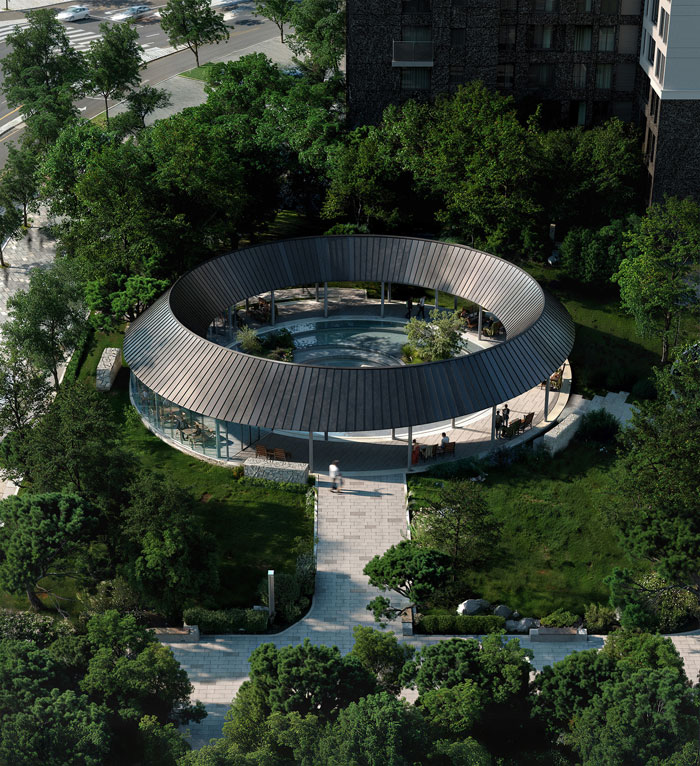
< PARK OASIS, ASIA DESIGN PRIZE 2026 Design of the Year >
This trend becomes even clearer when examining regional cases. Korea's 'PARK OASIS', selected as this year's ADP Design of the Year, is the clearest representation of the LUMINSCAPE concept. This work integrates elements of different natures, such as a residential complex, a public park, and a corporate brand, within a two concentric circle structure. Here, the concentric circles are not just decorative devices but act as core structures organizing spatial flow, field of vision, and the user's dwell experience. During the day, natural light diffuses along the curved surfaces, emphasizing the openness and continuity of the space; in the evening, artificial lighting forms layers of shadows along the inner surfaces, creating a calmer, denser atmosphere. In this space, light is not a decorative element supplementing form, but a structural element that allows one to perceive spatial directionality, depth, and the passage of time. By treating light as a core material from the initial design stage, PARK OASIS clearly demonstrates how LUMINSCAPE can be perfectly realized within contemporary spatial design and brand experiences.
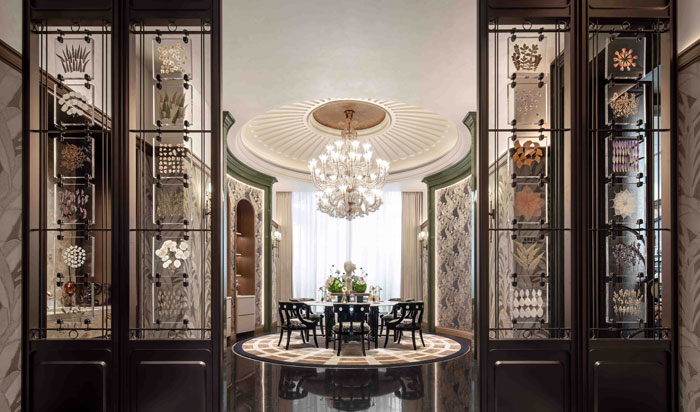
< Greentown Foshan Begonia Exhibition Center, ASIA DESIGN PRIZE 2026 Winner >
China's 'Greentown Foshan Begonia Exhibition Center' illustrates how LUMINSCAPE operates within a massive spatial scale. It weaves a vast indoor space, elegant curved structures, and restrained lighting direction into a single, colossal, integrated experiential environment. The simultaneous rise of words like 'large', 'wall', and 'scene' in the Chinese winning entries data proves that designing light based on grand walls and expansive interiors has become a crucial strategy. However, while the Korean case centers on a relatively refined dwell experience and quiet immersion, China traces a different trajectory by constructing a more dramatic and proactive immersive environment using overwhelming spatial scale and lighting direction as its weapons. The gradational shifts in light elevate the viewer's senses in stages.
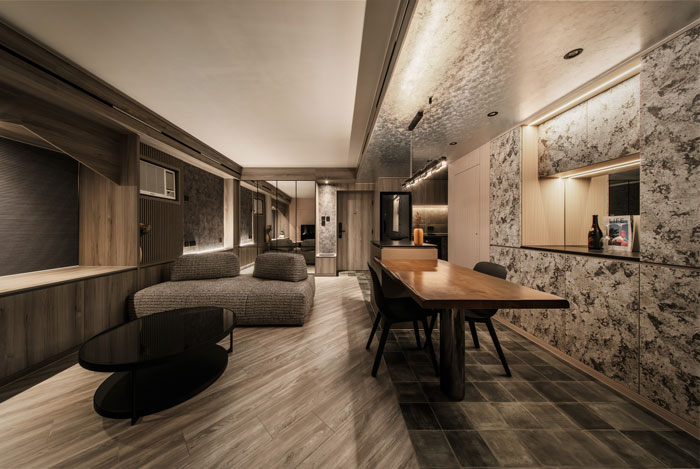
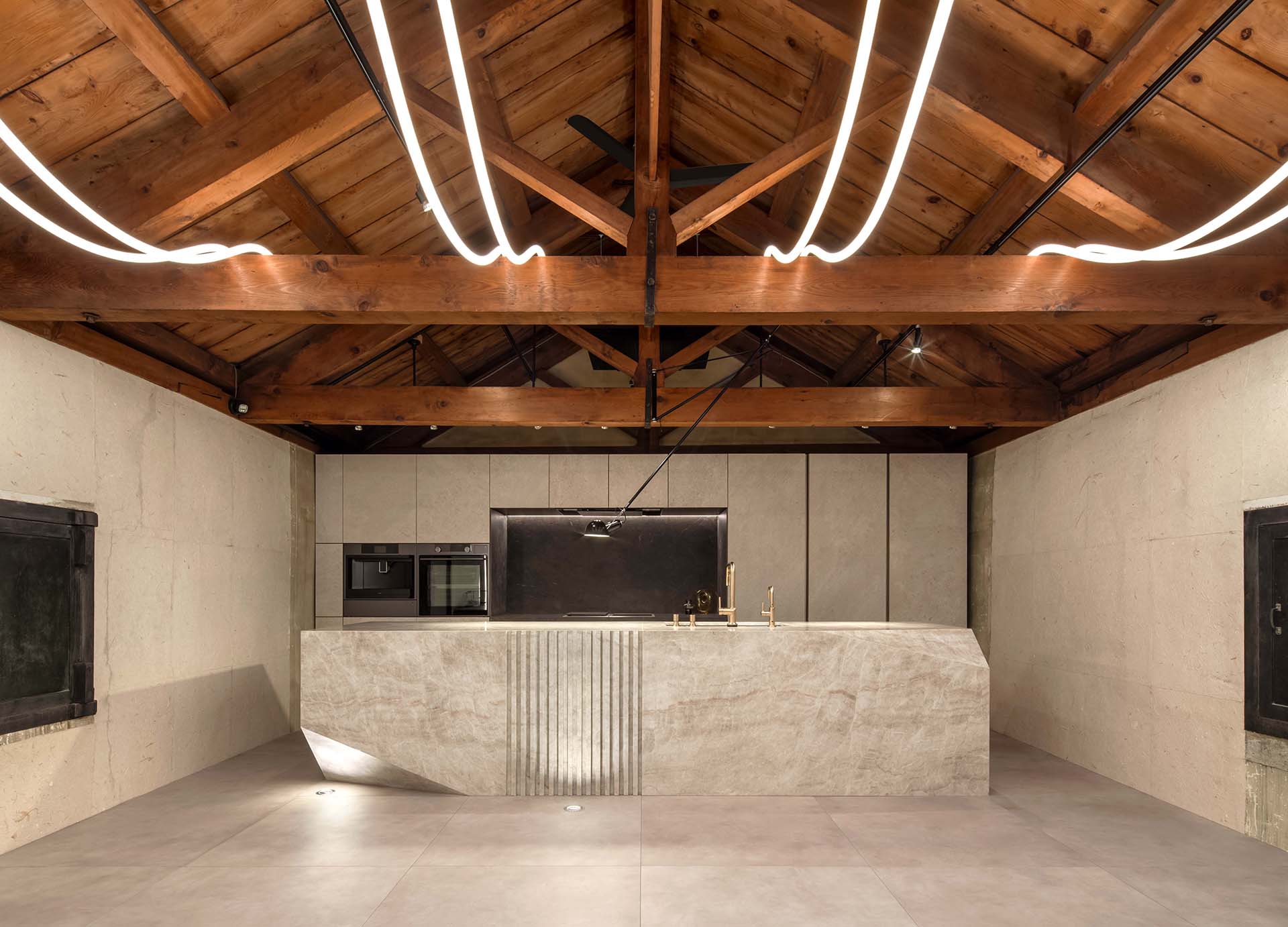
< The Minimalists Cave, ASIA DESIGN PRIZE 2026 Winner >
Hong Kong's winning entry, 'The Minimalists Cave', presents a different directional layer. The text analysis of Hong Kong's winning entries, where 'room' appears more frequently than 'space' and 'interior' ranks highly, is highly suggestive. This indicates that Hong Kong's design focuses not on filling wide spaces, but on using light to profoundly expand the physical limitations of a confined 'room'. Restrained illumination guides the user into a dimension of intimate contemplation, and the narrow space is reinterpreted into a densely condensed sensation mediated by the breath of light. It is a case that proves how a cramped physical area, when combined with light as a primary material, can be transmuted into a deeper and broader experiential dimension.
Synthesizing these regional cases reveals that LUMINSCAPE is not a uniform, superficial trend. If Korea's LUMINSCAPE is 'light that weaves a scene', China's is 'light that induces immersion', and Hong Kong's is 'light of condensation'. Although 'white' emerged as the top keyword across all major regions, the resulting projections of light upon that white canvas appear drastically different, thoroughly depending on the local context. What is even more noteworthy is that this current is not limited solely to spatial design. As seen in Japan's 'light wave' case, light is now rapidly expanding its influence into the realms of product and interface design. 'light wave' translates the physical phenomenon of light waves into a formative language, making light operate as the fundamental material that shapes the product's sense of form and its emotional persona. Home appliances whose surface textures change in response to ambient light, or devices that synchronize with the user's biorhythms, all stem from a paradigm shift that perceives light as an active, formative material.
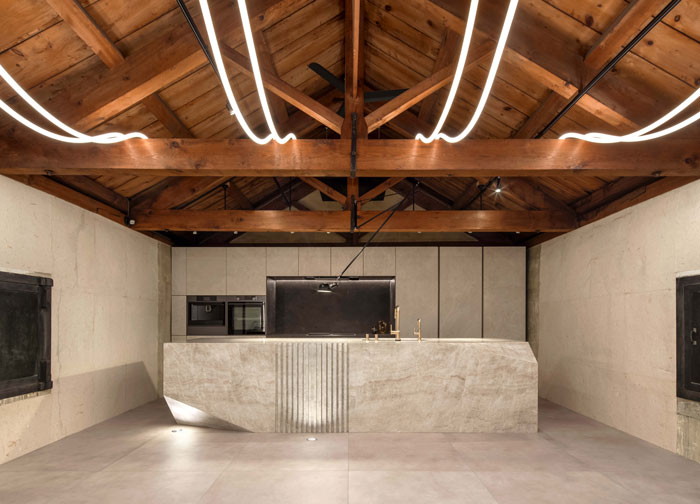
< light wave, ASIA DESIGN PRIZE 2026 Gold Winer >
A trend we cannot overlook at this juncture is that LUMINSCAPE is gradually absorbing the distinct field of 'lighting design'. Traditionally, lighting was considered an independent specialty within spatial design, and spatial designers often remained in a position of taking over the deliverables to make fine adjustments. However, in the full fledged era of LUMINSCAPE, these boundaries are progressively dismantled. Spatial designers must posit light as a structural axis from their initial sketches, and graphic designers must calculate how typography on a white surface will be read under specific lighting. In the very space where the once rigid borders between design disciplines smoothly dissolve, LUMINSCAPE will firmly establish itself as a new, common language. Finally, it is necessary to address the paradigm shift required from the perspective of the designer, the subject of the design process. In the earnest era of LUMINSCAPE, designers must internalize two new senses. First, they must become practitioners who 'Design' space alongside light from the very beginning, rather than those who merely 'Add' light as an afterthought. Second, they must handle light not simply by 'Seeing' it as surface brightness, but with the sense to 'Read' its underlying spatial context.
The core competency now demanded of designers extends far beyond the control of absolute light quantities. They must be able to comprehensively read the subtle color temperatures and textures of light, the abyssal depths carved out by shadows, and even the realms of negative space and silence left behind where light once lingered. We no longer ask merely, "What form shall we append onto a white canvas?" We must ask, "With what texture of light shall we make the white canvas itself breathe?" True LUMINSCAPE manifests precisely where that essential question begins. And the answers from contemporary designers who have most fiercely contemplated and responded to this era defining question unfold quietly, yet profoundly, throughout the winning entries of ADP 2026.















#14057, 905 49, Beolmal-ro 102beon-gil,
Dongan-gu, Anyang-si, Gyeonggi-do, Korea
Business Registration Number: 454-86-01044
Online Sales License No.: 2021-Anyang Dongan-1081
Copyright © DESIGNSORI Co., Ltd.