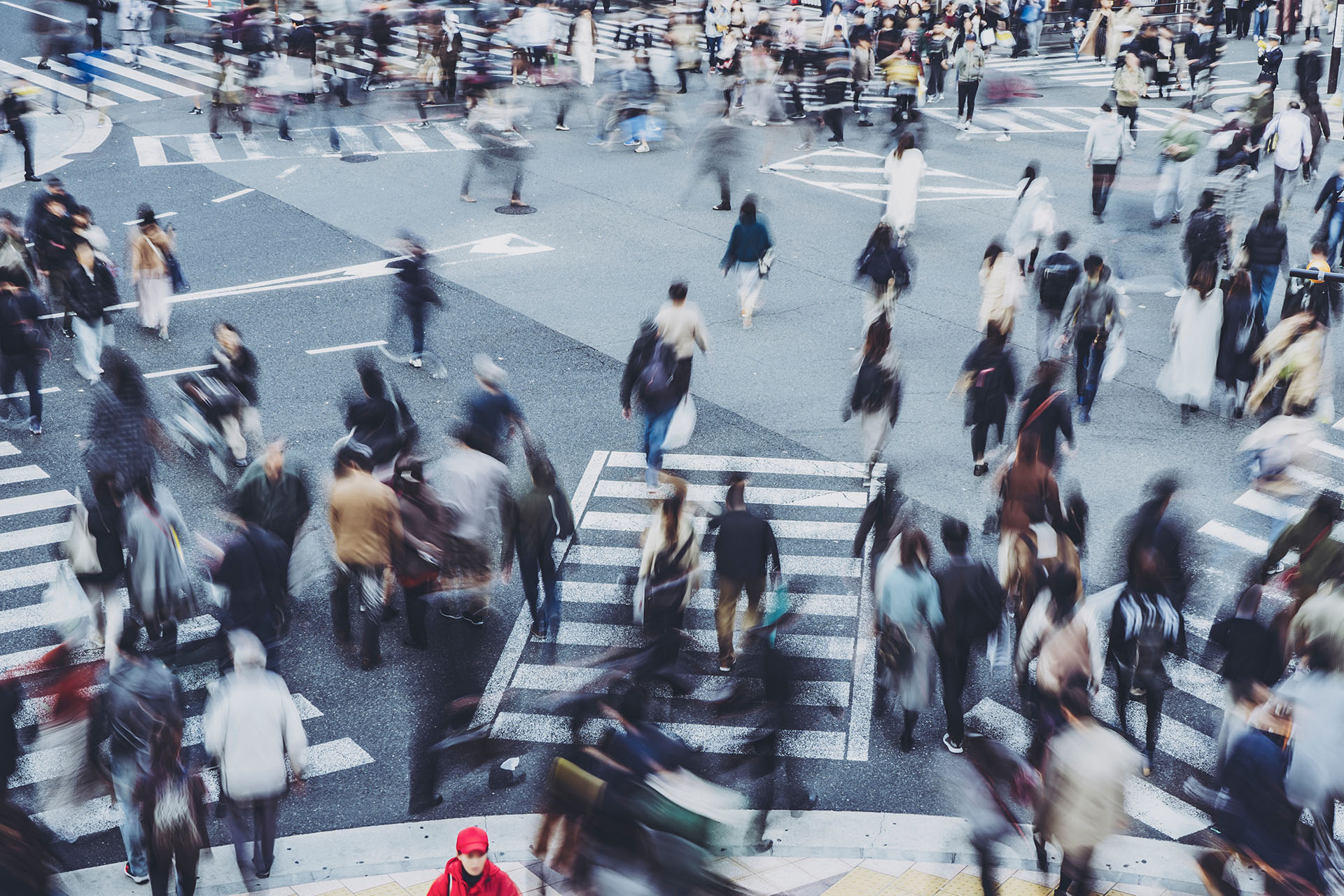
When we cannot own real estate, we feel as if we have fallen behind. When stock charts flash red, we are seized by the anxiety that we alone are being left out. The glamorous overseas travel photos of others on social media can instantly turn what was once a peaceful daily life into a shabby battlefield. Although modern people live in an age of greater material abundance than ever before, paradoxically, many are deeply trapped in the fear of exclusion felt when they cannot do what others are doing, that is, FOMO Fear Of Missing Out. This anxiety often stems from having misdefined the “user” of the life project itself. To spend one’s life energy not on the space where one truly wishes to dwell, but on the space meant to be seen by others, is a structural error driven not by essence but by deficiency. The moment we become complacent in the mirror of others’ gaze, our own subjective inspiration is buried beneath the noise.
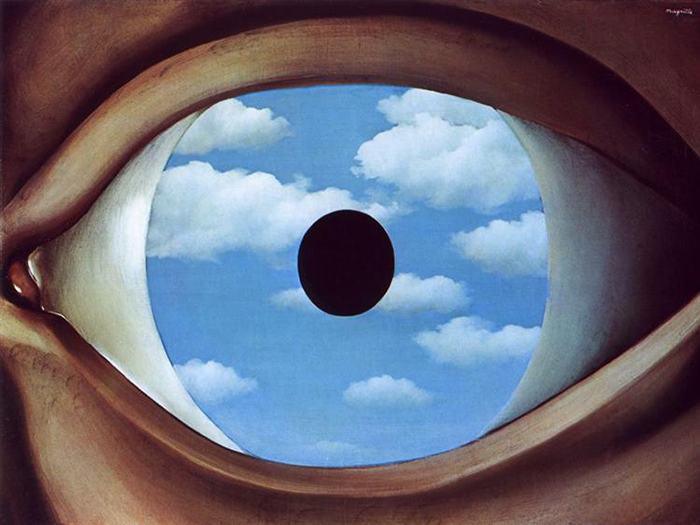
<Rene Magritte, The False mirror, 1928, oil on canvas, 54x80.9 cm, Museum of Modern Art, NY, US >
The Distortion of Observation: Between Persona and True Needs
All great creation begins with careful observation of its subject. But a life design consumed by FOMO is already misaligned at the very coordinates of observation. Rather than focusing on whether I truly need to cling to this asset, or what kind of aesthetic resonance this experience creates within me, I become hypersensitive only to the collective anxiety that says, “Everyone else has it, so if I do not, I will fall behind.” This is a fatal distortion that arises from the very stage of defining the problem. True design is the process of eliminating external white noise and descending deeply into the subject that is “myself.” Only when we boldly strip away the persona of success prescribed by society do the true needs that sustain our own distinctive lifestyle begin to emerge in clear outline.
The Gaze of the Self in Place of Functional Display
Every object we create contains a fundamental reason for its existence. Yet FOMO makes us obsess over “functional display” rather than the essence of life. It causes us to become fixated not on the contemplation and expansion that travel can offer, but on the instrumental function of recording it in order to gain the reactions of others. Function stripped of essence is hollow, and such hollowness inevitably calls forth an even greater sense of lack. We must pass every choice in life through an “inner filter.” We must ask ourselves, with seriousness: “Does this act align with my long term direction?” “Does this consumption become an inspiration that nourishes my aesthetic self?” When the point of reference moves from the outside to the inside, anxiety finally dissipates, and the center of gravity in our life design is restored.
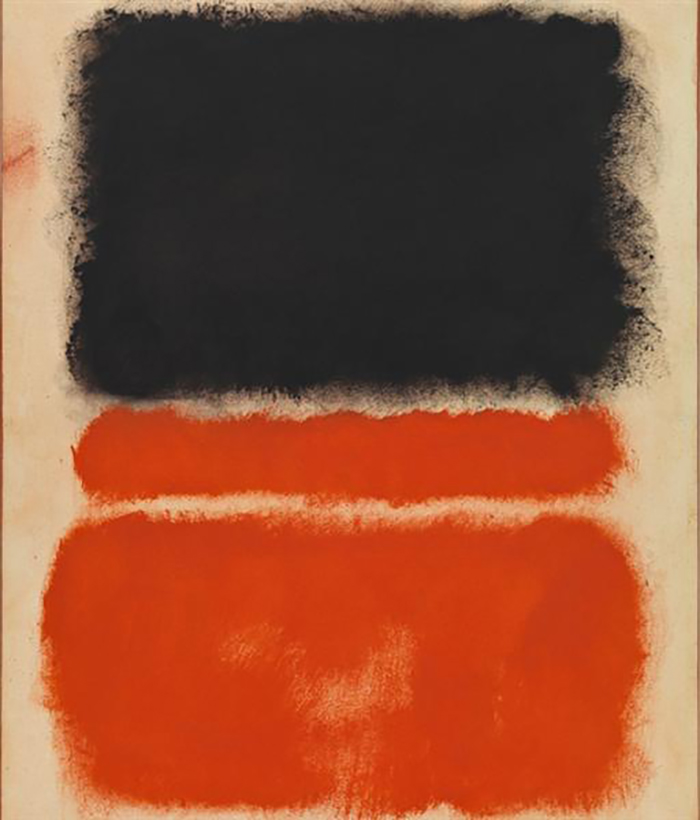
<Mark Rothko, Red, 1968, oil on canvas, 838x654 cm, Solomon R. Guggenheim Museum, NY, US>
The Power of Completion: A Mode of Life That Cannot Be Imitated
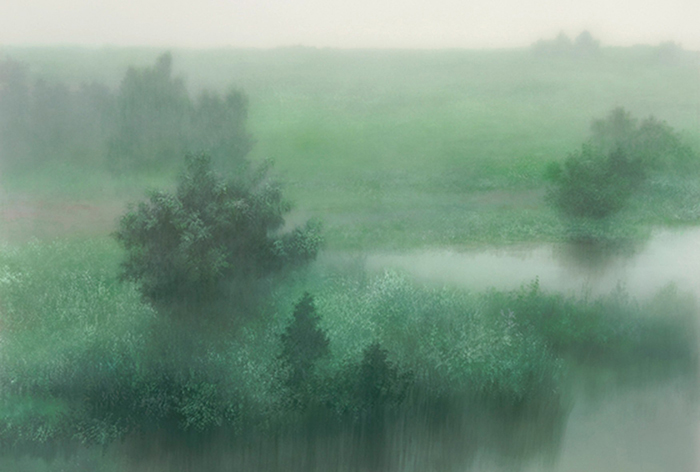
Jeongjungdong (靜中動): movement within stillness. It is part of the Korean DNA to preserve inner quiet and centeredness even amid the clamor of surrounding motion. I believe the reason Korean aesthetics have begun to be recognized on the global stage with timeless sophistication lies in the history embedded in our values of restraint, line, and emptiness—values grounded not in riding the speed of others, but in our own way of being. The moment we apply this “inner stillness” to life, we are able to look back on our lives subjectively and with clarity. To replicate someone else’s life is like mass-producing counterfeit products with poor finishing. By contrast, a life carefully built upon one’s own philosophy possesses a solid texture and aura of its own. Even if it does not follow the glamorous trajectory of others, a daily life filled with choices perfectly aligned with one’s essential values becomes, in itself, a masterpiece. Jeongjungdong. Even within a still landscape, the wind blows and the river flows. As we concentrate on our own lives, change continues to unfold without cease.
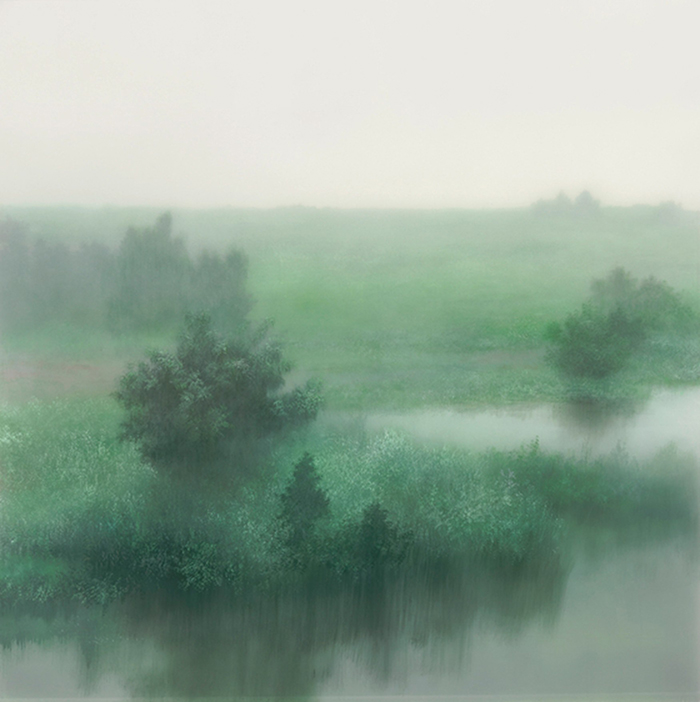
<Lee Ki-bong, Where You Stand Green-1, 2022, Acrylic and polyester fiber on canvas, 186 x 186 cm, Kukje Gallery>
Whose Blueprint Are You Building Today?
FOMO is a warning sign that appears when we hand over our authority as the subject of our lives to others. In a race run on tracks laid out by others, where only speed is contested, there is no finish line. It is time to unfold the blueprint once again. We must not settle into the gaze of others, but redefine the essential values toward which our lives should be directed. The image and gaze of others are merely materials for realizing your own values; they can never become the purpose itself. In a life designed around essence, there is no room for fear to enter. There exists only the unique trajectory of life that only you can complete, and its profound beauty. So I ask: whose blueprint are you using to design your today? And how are we contributing to the formation of our own self-directed lives?











#14057, 905 49, Beolmal-ro 102beon-gil,
Dongan-gu, Anyang-si, Gyeonggi-do, Korea
Business Registration Number: 454-86-01044
Online Sales License No.: 2021-Anyang Dongan-1081
Copyright © DESIGNSORI Co., Ltd.