
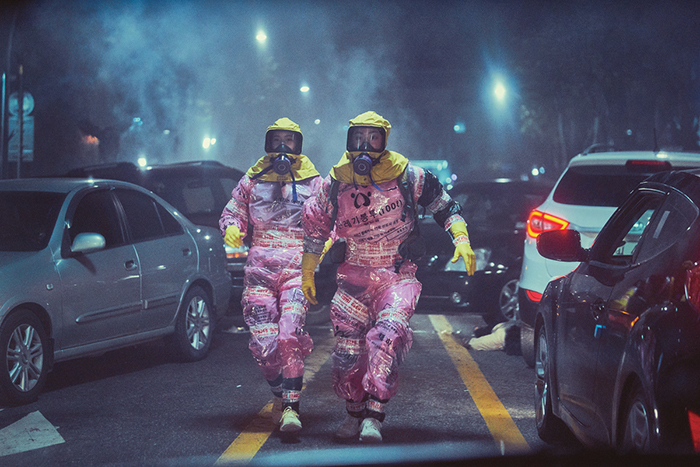
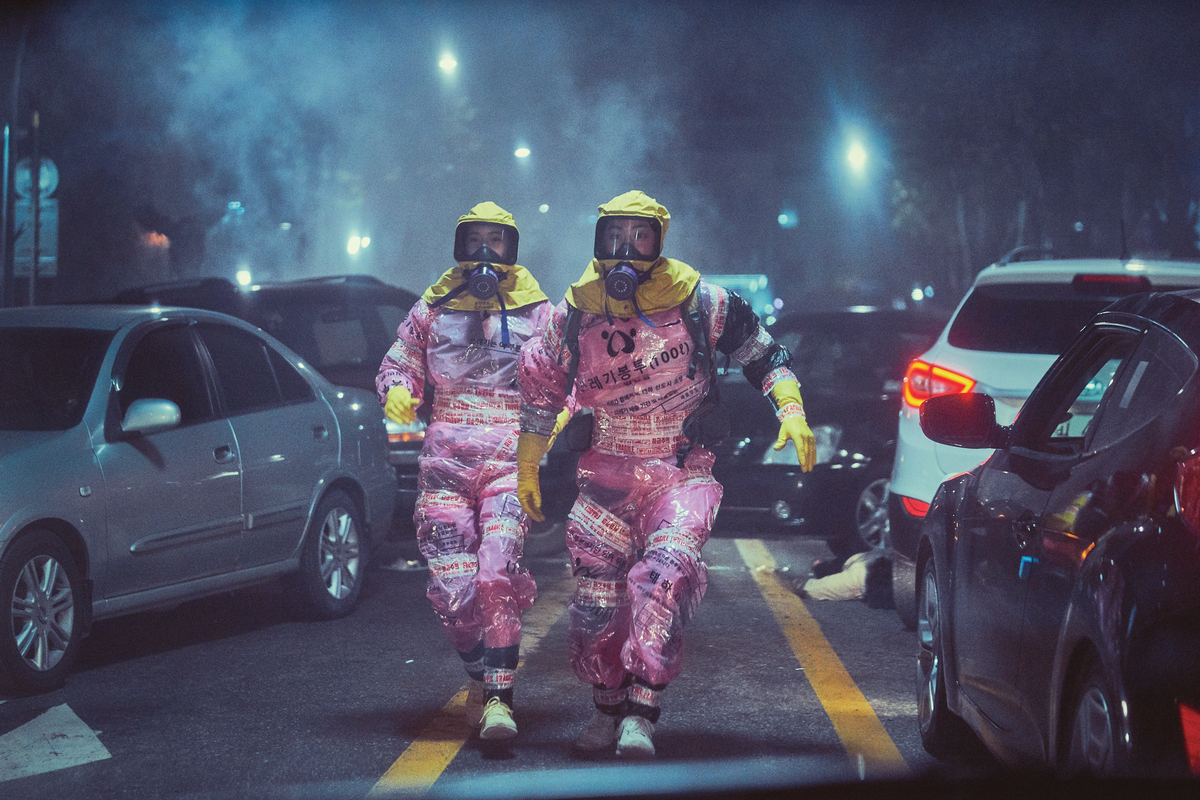
We rarely notice emergency exits in our daily lives. We know they exist, but we do not truly register them. In the film Exit, the protagonist moves without hesitation through a city engulfed in toxic gas, as if he already knows exactly where to go and which paths connect. Watching that scene, we naturally ask ourselves, “Would I be able to move like that in the same situation?” Most people probably could not. The reason is simple. We do not perceive spaces with emergencies in mind. In everyday life, our attention is tuned to convenience. We look at our phones while standing in front of elevators, and rarely check the location of emergency exits when entering a building. We have become accustomed to using spaces comfortably, rather than understanding how to use them safely. As a result, emergency exits are always there, but they remain outside our awareness.

In contrast, the animation 'Neon Genesis Evangelion' presents an entirely different world. The moment a threat is detected, the city responds instantly, and people move in perfect coordination according to the system. There is no time spent deciding where to go. This extreme setting reveals an important truth: in disaster situations, what matters is not momentary judgment, but a pre-established state of preparedness. Ultimately, the difference in crisis situations does not come from individual ability, but from a prepared environment and a prepared mindset. Those who are prepared can move quickly, while those who are not experience greater confusion within the same moment. And this difference is determined not after a disaster occurs, but in the everyday conditions that precede it.
Our indifference to emergency exits is not simply a matter of attitude. Human cognition operates around efficiency. Information that is rarely used or not immediately necessary is naturally pushed down in priority. Emergency exits fall into the category of “known but unused information,” and therefore remain outside our conscious awareness. The problem is that this cognitive structure continues to function even in emergencies. When a disaster occurs, people do not become more rational. Instead, their field of vision narrows, their options decrease, and they tend to follow familiar paths. This is why many people return to the entrance they originally used instead of heading toward an emergency exit. This is not irrational behavior, but rather one of the most natural human responses. However, from the perspective of public design, the key challenge is to reduce the moments when this “natural choice” becomes dangerous.



















#14057, 905 49, Beolmal-ro 102beon-gil,
Dongan-gu, Anyang-si, Gyeonggi-do, Korea
Business Registration Number: 454-86-01044
Online Sales License No.: 2021-Anyang Dongan-1081
Copyright © DESIGNSORI Co., Ltd.